
South Africa’s liberation archives offer lessons for democracy today
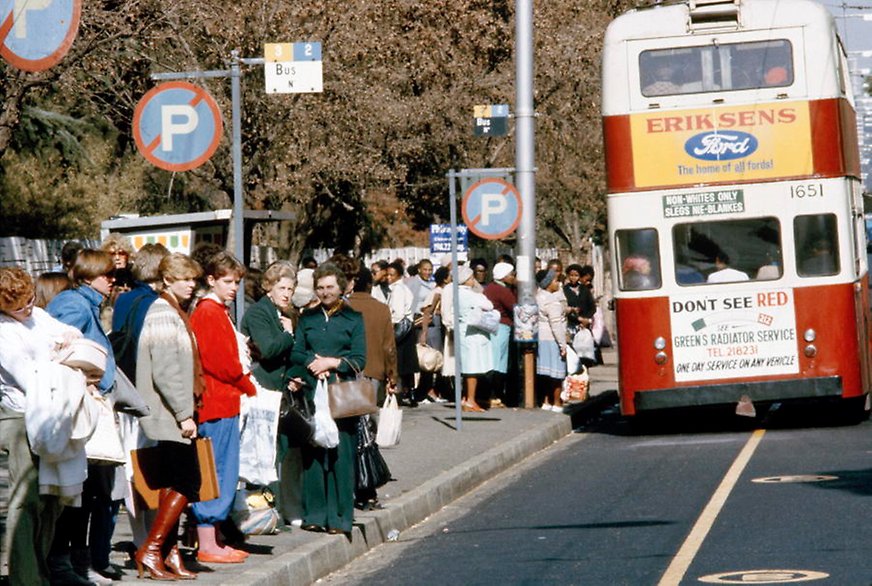
Apartheid enforced racial segregation and white minority rule in South Africa, denying black people fundamental political, social and economic rights. "Non-whites only", reads the sign on the bus in this photo from Johannesburg in 1982. Records of the struggle against the system remain fragmented and dispersed across archives and collections around the world. Photo: UN Photo
Apartheid and the long struggle against it left a deep mark on history and an enduring legacy for future generations. Yet many records from the era are fragmented, incomplete, hard to locate and dispersed across different collections and countries.
A new initiative brings archivists, academics and activists together to map and improve access to this rich tapestry of materials, essential to understanding the past.
Nearly 50 years after anti-apartheid activist Steve Biko died in police custody, investigators are still piecing together what happened. As South Africa reopened the inquest into his death, missing pieces of the official record were found not in police or court files, but among archival material held at the University of the Witwatersrand.
The first witness to testify in the inquest in August 2026, a police investigator, reported hitting a series of hurdles while searching official records – finding dockets with missing pages and others that seemed to “stop in the middle of nowhere”.
The Biko case is a striking example of why South Africa's liberation archives need to be mapped, preserved and made more accessible. This was the topic of a recent workshop at the Nordic Africa Institute, co-organised with the Swedish Labour Movement’s Archives and Library, and the International Institute of Social History from the Netherlands.
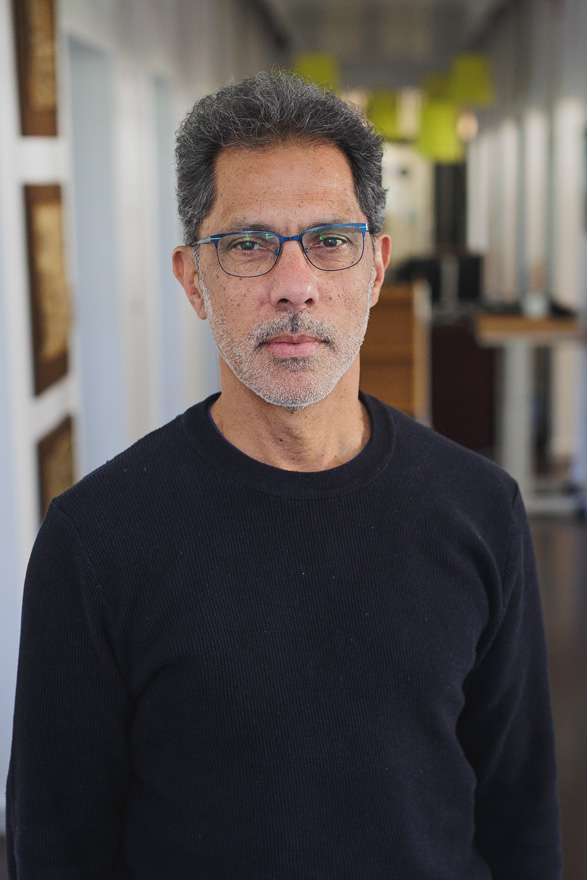
Professor Noor Nieftagodien, Head of the History Workshop, University of the Witwatersrand. Photo: Mattias Sköld.
Fragmented records
Liberation archives encompass the records left by liberation movements and the solidarity organisations that supported them – from correspondence, pamphlets and photographs to meeting records, personal papers and oral histories.
This was a committed investigator who went through the historical papers to support the [Biko] case,” explains Professor Noor Nieftagodien, Head of the History Workshop at the university. “But when one thinks about the dispersal of the archives, the fragmentation and inaccessibility, one has to recognise that there is a big problem.”
Nieftagodien, alongside other historians and archivists, has campaigned for years for access to the archives of South Africa's Truth and Reconciliation Commission (TRC), which investigated human rights violations committed under apartheid.
“The inaccessibility of those archives is a travesty because the TRC was after all, in the late 1990s, an important public expression of memory making,” he says.
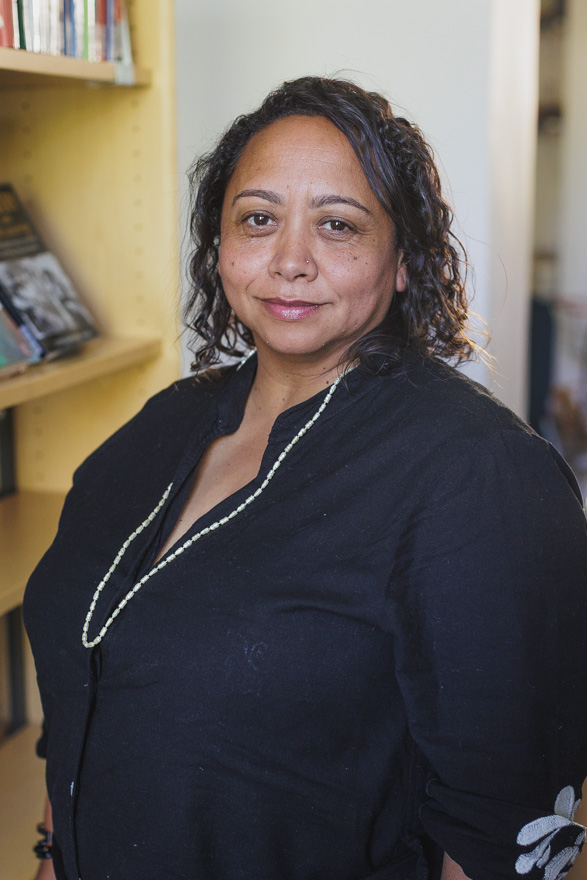
Geraldine Frieslaar, Chief Archivist, University of the Western Cape. Photo: Mattias Sköld.
Piecing together the past
Researching the history of the apartheid regime and the liberation movement is challenging for a variety of reasons, adds Geraldine Frieslaar, Chief Archivist at the University of the Western Cape (UWC).
“It can be very cumbersome to try and locate and navigate your way through. Sometimes archives have not seen the light of day for decades, and even when they are located, they’re not necessarily accessible,” she explains.
“Part of the wonder of archives is that you’ll never have a whole archive. It’s like trying to fit a puzzle and get as close as possible to complete," she adds, underlining the need to map where materials are held and echoing Nieftagodien’s call for better access.
“Archives have the ability to hold people and governments to account. It’s about justice and accountability. If you cannot access an archive, you cannot hold anybody to account.”
Frieslaar argues that the past has a direct relationship with South Africa’s ongoing transition to democracy.
“We are still collecting. Our collecting did not stop in 1994, it’s continuing into the present. That’s important for how we approach archiving practices.”
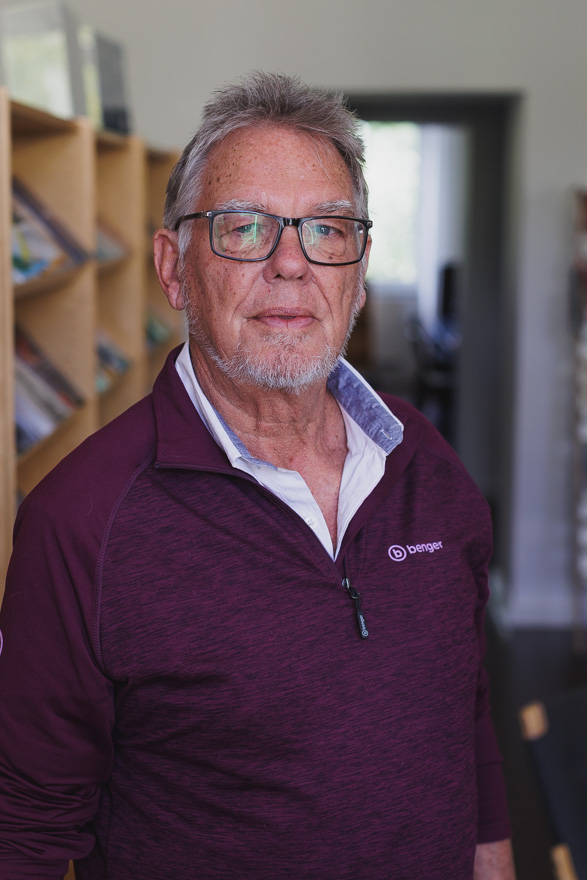
Horst Kleinschmidt, anti-apartheid activist and former IDAF director. Photo: Mattias Sköld.
Records of resistance
Horst Kleinschmidt, an anti-apartheid activist, spent more than a decade abroad, first in the Netherlands and then in London following his exile from South Africa in 1976. He led the International Defence and Aid Fund for Southern Africa (IDAF), which secretly channeled legal and humanitarian aid to political prisoners and their families.
He also collected materials from his contacts with African National Congress (ANC) members and other underground groups fighting against apartheid, without realising their significance at the time.
“They sent me their motivations for funding, their news sheets and pamphlets – everything related to their activism … I don’t know why but I had this fascination with holding onto documents and it happened to be a good thing,” he says.
“Your usual activist isn’t the kind of person who collects, documents and keeps things. They don’t keep diaries – it’s just not in their nature to hold onto things,” he adds.
“And it turns out that these documents were rare in South Africa. Either the police had confiscated or destroyed them, or the people who used them had to destroy them for their safety.”
Today, Kleinschmidt is creating a digital catalogue of his private archive and believes that better access is crucial for passing knowledge to a new generation of democracy and human rights activists.
“I hope that through the archives, that there are things that people can still learn from our mistakes. That instead of bumping their heads, they can find some guidelines.”
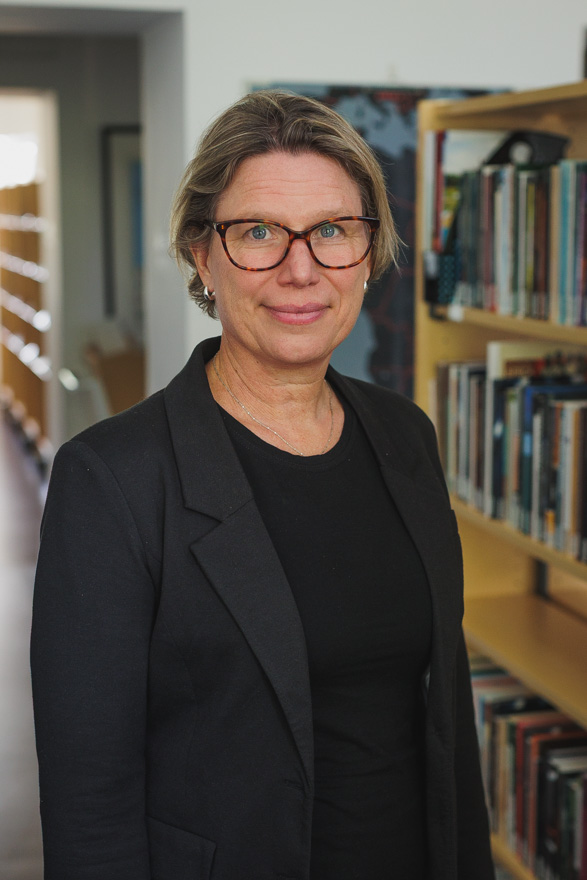
Anna Koblanck, Swedish journalist and independent researcher. Photo: Mattias Sköld.
Archiving activism: past and present
Swedish journalist Anna Koblanck has carried out research in South African archives related to the United Democratic Front (UDF), a broad coalition of anti-apartheid organisations that mobilised mass opposition to the regime in the 1980s. She has noted interest from Nordic climate activists looking for lessons to apply to the climate protest movement.
“There is so much to learn from the way the UDF organised itself and the popular resistance – and how the anti-apartheid movement mobilized international opinion,” she says.
There are manuals for how to form a street committee, how to behave if you’re in detention … Every part of society was mobilised, locally and internationally – people with very different backgrounds, unified under this one belief in human rights and democracy.”
As today’s activists look to earlier movements for lessons, some are becoming increasingly conscious of preserving the records of their own struggles.
Professor Noor Nieftagodien sees signs of growing interest in activist archiving – people preserving the records of their own movements – across the continent, driven by young activists and scholars, often emerging from social justice movements such as Gen Z and #FeesMustFall.
“The question is how does work to ensure access and organisation of archives link to contemporary processes of archiving associated with emancipatory politics?” Nieftagodien asks.
Text: Tom Sullivan
Liberation Africa: Mapping the Nordic archival record
The Nordic Africa Institute’s Liberation Africa resource documents the Nordic countries’ involvement in the liberation struggles of Southern Africa and helps researchers locate historical material scattered across different archives and collections.
Launched as a documentation project in 2003, it mapped archives in Denmark, Finland, Iceland, Norway and Sweden containing material on anti-apartheid resistance and liberation movements. Rather than bringing all the original records together in one place, Liberation Africa provides lists and links to material held in the Nordic countries.
The resource covers the liberation struggles in South Africa, Namibia, Angola, Mozambique, Zimbabwe, Guinea-Bissau and Cape Verde, as well as Nordic solidarity and support. Its material includes archival inventories, photographs, publications, posters and audio-visual records, along with more than 130 interviews with people who participated in or supported the liberation struggles.
NAI also holds extensive physical material relating to African liberation and Nordic solidarity, including documents, photographs and other printed and audio-visual material accumulated through decades of Nordic engagement with Africa.
The original Liberation Africa project was completed in 2009, but its underlying challenge remains highly relevant: important parts of Southern Africa’s liberation history are dispersed across countries, institutions and private collections. NAI is working towards making those holdings easier to locate and better connected with other collections and archives.